Want to launch a nursing career in months, not years? Discover how fast-track LPN programs compress classes and clinicals without sacrificing quality. See what it takes to qualify, how to compare schools, and where this credential can take you.
What Fast-Track LPN Training Means Today
Fast-track Licensed Practical Nurse (LPN) programs are designed to move motivated students quickly from the classroom to patient care. Many accelerated options run 9–12 months, with some intensive schedules finishing sooner when state rules and clinical availability allow. These programs blend classroom theory, skills lab check-offs, and supervised clinical rotations in hospitals, long-term care, and community settings.
Fast-track does not mean watered down. It means compressed. Expect longer days, fewer breaks between terms, and a heavy weekly time commitment. Hybrid formats—didactic coursework online plus in-person labs and clinicals—are increasingly common, allowing students to reduce campus seat time while meeting hands-on requirements. Before you enroll, verify that the program is approved by your state board of nursing and prepares you for the NCLEX-PN licensure exam.
How LPN Programs Are Structured and What They Require
Most LPN curricula are lockstep, cohort-based programs that move you through essential competencies in a specific order. A typical structure looks like this:
- Core sciences: Anatomy and Physiology, Microbiology essentials, and Nutrition provide the foundation for safe practice.
- Nursing fundamentals: Basic patient care, vital signs, infection control, and documentation skills start in week one.
- Pharmacology and med administration: Dosage calculations, medication safety, and administration routes are mastered with strict check-offs.
- Adult, geriatric, and maternal-child care: Medical-surgical nursing, long-term care, and introductory maternal/child content align with clinical rotations.
- Mental health and community health: Communication, de-escalation, and population health principles prepare you for diverse settings.
- Clinical rotations: Supervised patient care hours typically range from 400–750+ hours depending on state requirements.
Admissions and progression requirements are equally important:
- Prerequisites: High school diploma or GED, placement testing (often TEAS), background check, drug screen, immunization and health clearances, and current BLS/CPR certification.
- Time commitment: Accelerated cohorts often require 25–40+ hours per week between lectures, labs, clinicals, and study.
- Competency check-offs: You must demonstrate proficiency on skills (e.g., sterile technique, injections) before touching patients.
- Attendance policies: Fast-track timelines leave little room for absences; missed clinicals can delay graduation.
- Exit exams and NCLEX readiness: Many programs require standardized exit testing to confirm readiness for the NCLEX-PN.
Accelerated Healthcare Training Options Explained
If speed is your priority, you have multiple pathways. LPN is one of the fastest routes to hands-on nursing practice, but it’s not the only accelerated option:
- LPN (fastest to bedside): Typically 9–12 months, qualifies you for entry-level nursing roles in long-term care, clinics, and some hospital settings depending on state and employer policies.
- CNA (shortest training, lower pay): Often 4–12 weeks; a good on-ramp but not a nursing license.
- Accelerated RN pathways: For those with prior college credits or a non-nursing bachelor’s degree, accelerated programs can lead to RN licensure faster than traditional timelines. For perspective on Rapid RN routes, see this overview of the fastest ways to become a nurse and a second analysis from Goodwin University, What is the Fastest Way to Become a Nurse?
For online and hybrid LPN options, compare approved programs carefully. A helpful roundup of current offerings is available at this list of fast-track LPN programs online. You’ll also see headlines about six-month LPNs. While some states and schools offer intensive timelines, always verify clinical-hour minimums and state approval. For a reality check on what “six months” really means in practice and admissions pacing, review this Florida accelerated LPN programs overview. And if you’re crowdsourcing advice, groups like this community discussion on fast-track LPN or RN schools can offer peer insights—just confirm details with official school and state board sources.
Sample Tuition and Pace: Fast-Track LPN Programs
Use estimated total program cost—not just per-credit tuition—when comparing timelines and value. Private career schools often cost more but may run continuous terms and offer multiple start dates, which can speed completion. Public technical centers and community colleges are usually more affordable but may have waitlists.
| School (Program) | Location | Estimated Total Cost |
|---|---|---|
| Rasmussen University (Practical Nursing) | Ocala, FL | $26,000 |
| Concorde Career College (Practical Nursing) | Jacksonville, FL | $30,000 |
| Jersey College (Practical Nursing) | Tampa, FL | $26,500 |
| ECPI University – MCI (Practical Nursing) | Virginia Beach, VA | $31,000 |
| Fortis College (Practical Nursing) | Nashville, TN | $28,500 |
| Palm Beach State College (Practical Nursing) | Lake Worth, FL | $6,200 |
| Houston Community College (LVN) | Houston, TX | $8,400 |
| North Central Texas College (VN) | Gainesville, TX | $13,200 |
| Herzing University (Practical Nursing) | Orlando, FL | $24,500 |
| Dorsey College (Practical Nursing) | Madison Heights, MI | $33,000 |
Note: Estimates include tuition and standard fees but may exclude uniforms, immunizations, background checks, exam fees, and travel to clinicals. Costs vary by campus and term; confirm with each school’s catalog or financial aid office.
Licensing, Certification, and Career Opportunities
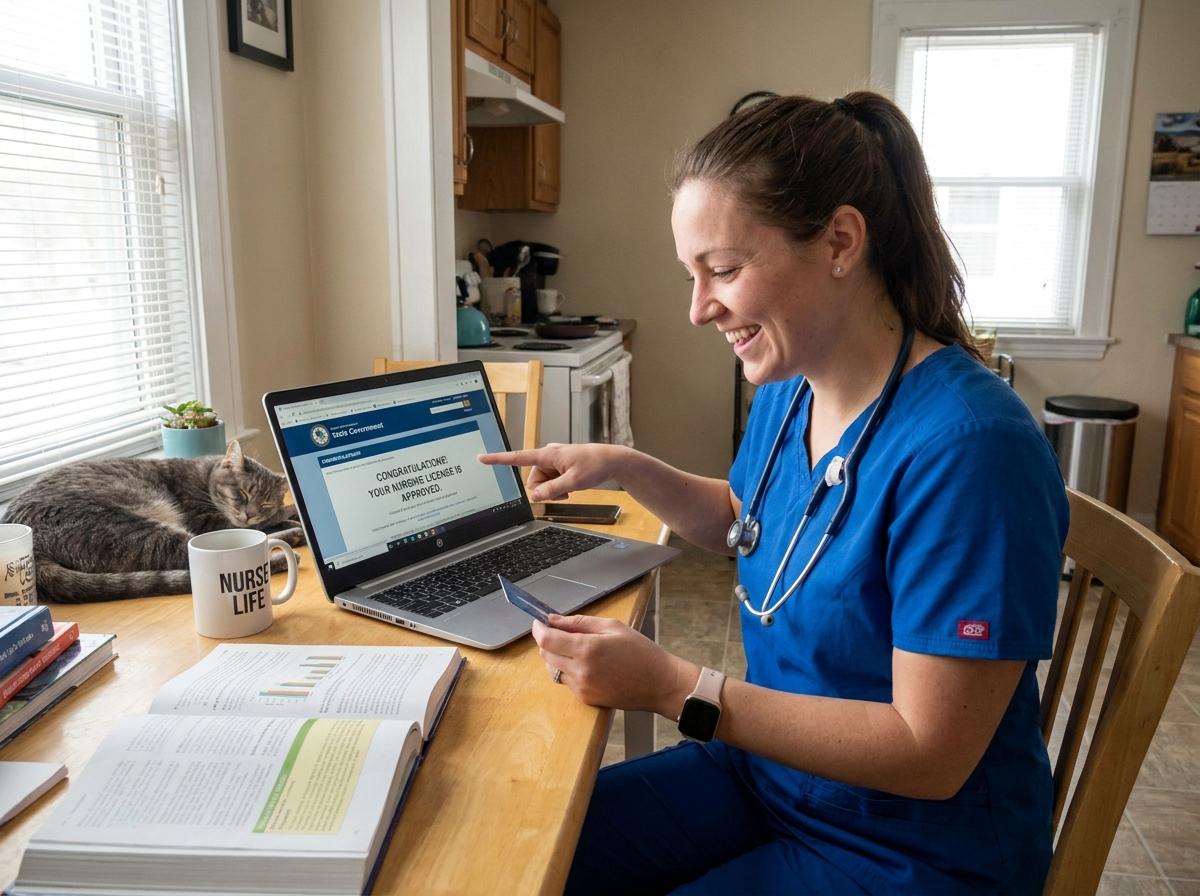
After graduating from an approved program, you’ll apply to your state board of nursing and register for the NCLEX-PN through Pearson VUE. Once authorized to test, schedule promptly—first-time testers perform best while content is fresh. Most states also require a criminal background check, current BLS/CPR certification, and primary-source verification of education.
Where can you work? LPNs are employed by long-term care and rehab facilities, assisted living, home health agencies, physicians’ offices, schools, correctional healthcare, and some hospital units depending on state scope and employer policies. Pay varies by region and setting, but many new LPNs see starting wages that translate to roughly $55,000–$60,000 per year nationally, with differentials for nights, weekends, and high-need specialties.
Boost your marketability with add-on credentials:
- IV therapy certification: Expands your scope in many states and improves hiring prospects.
- Wound care training: Valuable in long-term and post-acute settings.
- Gerontology or dementia care: Aligns with growing demand in aging populations.
Many LPNs bridge to RN through LPN-to-ADN or LPN-to-BSN programs, often using flexible formats while working. Compact-licensure states can also expand your geographic job options if you qualify for multistate privileges under the Nurse Licensure Compact (NLC).
Admissions Checklist and Tips for Columbus
Use this quick plan to go from researching to accepted—with an eye on accelerated timelines:
- Verify state approval: Confirm the program is board-approved and NCLEX-PN eligible.
- Clarify pace: Ask for a week-by-week schedule detailing lecture, lab, and clinical hours.
- Check clinical partners: Strong hospital and long-term care partnerships in or near Columbus can reduce commute time and missed shifts.
- Total cost of attendance: Request a written estimate including technology fees, books, uniforms, vaccines, background checks, and testing.
- Financial aid timing: Accelerated starts may require quick FAFSA submission and document turnarounds.
- TEAS prep plan: A higher score can secure your seat and scholarships in competitive cohorts.
- Life logistics: Arrange childcare, transportation, and job hours before term one; fast-track success depends on stability outside the classroom.
Is a Fast-Track LPN Right for You?
Choose fast-track if you have the bandwidth for an intensive, structured schedule and want to earn licensure quickly. The upside is speed to earnings, especially if you plan to use your LPN role as a stepping stone to RN. The trade-off is less flexibility—vacations, overtime shifts, and long breaks usually have to wait until after graduation.
To get started, shortlist three approved programs that fit your budget and commute, confirm their NCLEX-PN pass rates and clinical hours, and map your weekly schedule on paper. Then, lean on credible resources: compare acceleration strategies from Concordia’s fast-track overview, cross-check with Goodwin’s guide to the fastest path, scan current online/hybrid LPN options, and set realistic expectations with this Florida-focused accelerated LPN timeline explainer. If you network in online groups such as this discussion on fast-track nursing schools, always verify claims with official sources.
Fast-track LPN training is a proven, high-impact route into healthcare. With the right program fit and a disciplined plan, you can compress your education, pass the NCLEX-PN, and start caring for patients—sooner than you might think.